Saturday, October 11, 2008

Take with you d'varim! - a follow-up!

I often have a strange feeling at the end of Yom Kippur. Of course, I am overjoyed at the feeling that our prayers have been heard and that our sins have been forgiven. The Shulchan Aruch (Orach Chaim 425:1), in the gloss of the ReMa (Rabbi Moshe Isserless), that is is a mitzvah to begin bulding our sukkah as soon as the fast ends, in order not to pass over a mitzvah that comes to hand. This is surely a beautiful concept, and amongs its messages is the one that Yom Kippur is not an end, but a means to continue our relationship with God and mitzvot. However, this still leaves me with one issue - How do we ensure that the process of self-introspection and reflection that we have just gone through is not forgotten, and that do not forget the steps and prayers in which we were immersed in order to improve our behavior and actions?

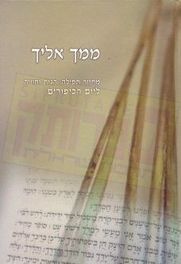
When I was in Israel on Nativ, I was introduced to an amazing Machzor which has forever altered my High Holiday experience. Named ממך אליך (Mimcha Eilecha - 'From You, To You'), it's concept is brilliant - to provide a complete, traditional text surrounded by a plethora of traditional and modern commentaries, with everything from traditional, medieval and hassidic texts to modern poetry and short stories. Although it sounds like a lofty goal, I would love to see if anyone would publish a similar set in Emglish: a complete traditional Hebrew text, a translation that is faithful to the original, and texts to complement it from every corner of the Jewish experience, spanning time, place and outlook. While I do find the traditional liturgy and especially the piyutim (poems which complement the structured prayers) very meaningful, the readings and quotes in this Machzor have helped to enhance the meaning of my Rosh Hashanah and Yom Kippur experience.

On the final page of the Yom Kippur Musaf service I found a short bt very meaningful quote which hearkens back to my d'var torah for Shabbat Shuvah:
קחו עמכם דברים ושובו אל ה' -את הדברים שאתם אומרים בבית הכנסת, בשעת התפילה והלימוד, אל תשאירו שם, אלא קחו את הדברים הללו עמכם גם בצאתכם משם.
"Take with you words (d'varim), and return to God" - These words which you say in the synagogue, during times of prayer and study, should not be left there, but rather should be taken with you when you leave there."
- Malbim (19th century Russia)

I feel that this quote is the perfect answer to my search. There is a reason the Yom Kippur happens once per year, as it is the pinnacle of our relationship with God. But this day was and is not an end in and of itself, but a means to impact on how we choose to live our lives each and every day. Especially on Yom Kippur, but each and every time we daven or learn, we should not leave our words and prayers in Shul, but allow them to influence our daily lives. Judaism is not meant to be just a compartment of our lives, but the essence of who we are and what we believe in.

Friday, October 3, 2008

Hayom! - היום! - Today!

While whole bookshelves have been written about the themes of the High Holiday Liturgy, I would like to focus on one which I find particularly meaningful and which helps explain my great distraught at reading a feature article in the New York Times yesterday.

Throughout the liturgy, both the core b'rachot and the piyutim, of both Rosh Hashanah and Yom Kippur, remind us of the special power invested in those very days, in the repeated use of the word 'Hayom' - today, this day. These references reminded me during my tefillot to concentrate on the unique opportunity to reflect on the beginning of a New Year, and the focus on the day elevates the other core themes of the Rosh Hahanah Musaf (God's Kingship, Remembrance and Revelation), as well as atonement on Yom Kippur.
Here are a number of the countless tefillot that reflect the 'Hayom' theme, which has helped bring meaning to my Yamim Noraim so far.

וּנְתַנֶּה תּקֶף קְדֻשַּׁת הַיּום. כִּי הוּא נורָא וְאָים
And we proclaim to you the greatness of this day, for it is terrible and awesome.

עוד יִזְכּר לָנוּ אַהֲבַת אֵיתָן, אֲדונֵינוּ.
וּבַבֵּן הַנֶּעֱקַד יַשְׁבִּית מְדַיְּנֵנוּ.
וּבִזְכוּת הַתָּם יוצִיא הַיּום לְצֶדֶק דִּינֵנוּ.
כִּי קָדושׁ הַיּום לַאֲדונֵינוּ:
May he still remember for us the love of the steadfast one (Avraham), our Ruler,
and through the one who was bound (Isaac) may he set to rest our strict judgment,
And through the merit of the pure one (Jacob) may he bring out today a positive decree,
For today is holy to our God!

היום הרת עולם, היום יעמיד במשפט כל יצורי עולמים
Today is the birthday of the world, today all creatures of the world will stand in judgment.

הַיּום תְּאַמְּצֵנוּ:
אמן:
הַיּום תְּבָרְכֵנוּ:
אמן:
הַיּום תְּגַדְּלֵנוּ:
אמן:
Today you will strengthen us - amen!
Today you will bless us - amen!
Today you will raise us up with your greatness - amen!

And on Yom Kippur, we repeat too many times to count, in our liturgy and Torah reading (Vayikra 16:30)
כִּי-בַיּוֹם הַזֶּה יְכַפֵּר עֲלֵיכֶם, לְטַהֵר אֶתְכֶם: מִכֹּל, חַטֹּאתֵיכֶם, לִפְנֵי יְהוָה, תִּטְהָרוּ.
For on this day shall atonement be made for you, to cleanse you; from all your sins shall ye be clean before the LORD.

As this is only a sampling of the times that our rabbis reinforce the power of these special days to transform us each year, I was greatly distressed to see this article on the front page of the Metro section yesterday.
Rabbi Has Message. So Does Cellphone. - NYTimes.com
In it, the Times reporters traveled to a number of Reform and Conservative congregations in Manhattan and at each found a variation of the same scene. Congregants frantically walked in and out of the service, checking their cellphones, blackberries and iphones for the latest financial news. At one Conservative shul, the static from so many electronic devices caused their microphones to malfunction.
While I did find out the gravity of the financial situation after the conclusion of the holiday, and while I understand that I don't work on Wall Street, I think that not being able to remove oneself from the world of business on such a special day is both sad and disrespectful. If the news outside is sad, than it is even more of a reason to leave it behind and come together as a community to praise the "author of the universe (אדון הכל) and to pray for a better future.
While I personally would not use an electronic device on Yom Tov out of halachic (Jewish legal) imperative, I would encourage others who do not feel that compulsion, to turn off their communication devices, and instead communicate with their souls and with God, "He who spoke and the world came into being." Wall Street will open after shul and after the holidays. But this day, these days of awe, only come once per year. May we sense their message and seize the power embedded in the words of the machzor and the days themselves. I wish to conclude with one final prayer:
כְּהַיּום הַזֶּה תְּבִיאֵנוּ שָׂשִׂים וּשְׂמֵחִים בְּבִנְיַן שָׁלֵם:
כַּכָּתוּב וַהֲבִיאותִים אֶל הַר קָדְשִׁי וְשִׂמַּחְתִּים בְּבֵית תְּפִלָּתִי עולתֵיהֶם וְזִבְחֵיהֶם לְרָצון עַל מִזְבְּחִי כִּי בֵיתִי בֵּית תְּפִלָּה יִקָּרֵא לְכָל הָעַמִּים:
On a day such as this may you bring us, glad and rejoicing in the rebuilding of Shalem (=Jerusalem, but lit. wholeness, completion, peace), as it is written (Isaiah 56:7):Even them will I bring to My holy mountain, and make them joyful in My house of prayer; their burnt-offerings and their sacrifices shall be acceptable upon Mine altar; for My house shall be called a house of prayer for all peoples.

Amen.

Shabbat Shalom and G'mar Chatima Tovah!

Take with you d'varim (words?) - Parashat Vayelech

Hayamim chol’fim, shanah overet, aval hamanginah l’olam nish’eret

The days change, a year passes, but the melody remains.

The words to this Israeli folk/children’s’ song come to mind when reading this week’s short, but significant portions – the parasha of Vayelech from the Torah, where Moshe prepares to submit his poetic legacy to the people of Israel, and the Haftarah, which gives the name of Shuva to this special Shabbat. I would like to focus on the opening of this haftarah, and an important lesson that can be drawn from it.

This week’s haftarah is actually a composite of selections from among three of the twelve minor prophets, beginning with the concluding portion of the book of Hosea. Hosea’s prophecy deals with what Professor Amy Kalmanofsky calls the wayward wife metaphor, in which God is the husband and Israel, an unfaithful wife. But as Hosea’s words come to a close, the message is one of hope and reconciliation, appropriate for this season in which we reflect on our past deeds and how we can alter and improve our relationships with God and those close to us. The prophet, acting as God’s conduit, announces:

Return, O Israel, to the Lord your God,
For you have fallen because of your sin.
3 Take d’varim with you
And return to the Lord.
Say to Him:
"Forgive all guilt
And accept what is good;
Instead of bulls we will pay
[The offering of] our lips. (Hosea 14:2-3)

In Hosea’s vision, our return to God is not based on materialistic of financial acts – but Rabbi David Kimche (RaDaK) argues that it cannot be just words either. He explains, “I do not ask from you gold or silver or offerings, but rather a complete t’shuva with all of your heart. “

We are told that we can’t buy our T’shuvah with material good, but Hosea seems to imply that Teshuva does not take place in a vacuum; while we should surely start fresh with our words and actions, we are not required to go it alone. This prophetic call for our return is phrased in the plural, to remind us that repentance is designed to take place in a community, like ours here at MSRH and JTS, where we can recognize that we all have faults and shortcomings, and we can support one another in our growth and learning over the coming years. I would like to interpret Hosea’s term of d’varim as words of Torah, but Torah in the broadest sense. I hope that we can all find our spark of Torah in the new year, whether it is by studying with a friend, repairing the world, or anything in between. God has called us to return, our only requirement is to hear that call and take with us D’varim on our journey.

Shabbat Shalom and G’mar Chatima Tovah!

Thursday, September 25, 2008

Through the Torah shall we be blessed

Being a college student concurrently at two institutions is not always easy, and this week was filled with reading, paper-writing, and waking up early for selichot services in anticipation of the approaching Yamim Noraim (high holydays). But it was also filled with much blessing. One special blessing that I was given this week was the opportunity to meet in a small, intimate forum with prominent Israel author and intellectual Amos Oz and approximately 25 other undergraduates. Although I have not yet had the privilege of reading Oz's work, it was fascinating to hear from and ask questions of someone with such broad life experience and depth of insight. Although Professor Oz's words were sometimes difficult to hear or agree with, especially regarding sacrifices that Israel would be forced to make in its future, they came from a place of honesty not often heard from politicians or other public figures.
But aside from being blessed with this special opportunity, I am happy to be in a community where serious Torah study and community building occurs daily. At JTS, I feel lucky to have learned about the development of Halacha with Rabbi Joel Roth, the laws of inheritance from Massachet Bava Batra with Dr. Jonathan Milgram, Medieval Jewish History with Dr. Benjamin Gampel, and Isaiah and Jeremiah with Dr. Amy Kalmanofsky.
However, one of my greatest pleasures is learning Torah lishmah, for its own sake. I again had the pleasure of learning Midrash with my friend Yossi, and we were inspired by halachic lessons on this week's parashah, and philosophical musings from Pesikta D'rav Kahana (a Palestininan collection of midrashim related to special Torah and Haftarah readings).
I was especially inspired from a piece in D'varim Rabbah (8:2):
רבנן אמרי: אמר הקב"ה: אם ברכת את התורה לעצמך את מברך.
מנין?

שנא' (משלי ט): כי בי ירבו ימיך ויוסיפו לך שנות חיים.
The Rabbis taught: If you make a B'aracha over the torah [study or reading], you will recieve a blessing for yourself... as it is written: "Through me shall your days multiply, and years of life shall be added to you" (Proverbs 9).

The shoet parashah of Nitzavim has deep meaning as we approach Rosh Hashanah. We are told (D'varim 30:8): " See, I have set before you this day life and good, and death and evil." After learning this midrash and examining the parshah, I will try to be more concious of the blessings in my daily life, and increase Torah and the blessing that comes with it. Just as we are told in the Torah, we too can choose in our own activities to choose the paths that highlight life and good.

On this not, I pray that we shall all be blessed with a Shabbat Shalom and a Shanah Tovah umvorechet (a good and blessed year)!

Friday, September 12, 2008

Parashat Ki Tetze - Surrounded by Mitzvot!

This week is a special parasha, not only because it contains the most mitzvot of any in the Torah, but it also was (one of the) parsh(iot) on which I marked my becoming a Bar Mitzvah seven years ago. Though some may find the lack of any narrative in the parashah a bit dull, I find the plethora of laws both exciting and axhilirating, as they have so much of an effect on what we do as Jews and members of a western democratic society.
This week I also began a chevruta in Midrsh with my friend Yossi, in which we plan on studying a selection of midrashim related to the week's parasha. There were so many interesting ideas in what we learned that it was hard to choose just one. the following text, about which I will comment comes from D'varim Rabbah 6:3:
ג [לכל מקום שתלך המצות מלוות אותך]
זה שאמר הכתוב (משלי א): כי לוית חן הם לראשך.
רבנן אמרי: נעשה דברי תורה חן לרשיותך.
כיצד?
אדם בן תורה, בשעה שהוא מזקין הכל באין ומסבבין אותו ושואלין אותו דברי תורה.

דבר אחר:
מהו כי לוית חן?
אמר רבי פנחס בר חמא: לכל מקום שתלך המצות מלוות אותך.

כי תבנה בית חדש ועשית מעקה לגגך.
אם עשית לך דלת, המצות מלוות אותך, שנאמר (דברים ו): וכתבתם על מזוזות ביתך.
אם לבשת כלים, חדשים המצות מלוות אותך, שנאמר: לא תלבש שעטנז.
אם הלכת לגלח, המצות מלוות אותך, שנא': לא תקיפו פאת ראשכם.
ואם היה לך שדה והלכת לחרוש בתוכה, המצות מלוות אותך, שנאמר (דברים כב): לא תחרוש בשור ובחמור יחדו.
ואם זרעת אותה, המצות מלוות אותך, שנא' (שם): לא תזרע כרמך כלאים.
ואם קצרת אותה, המצות מלוות אותך, שנא': כי תקצור קצירך בשדך ושכחת עומר בשדה. אמר הקב"ה: אפילו לא היית עוסק בדבר אלא מהלך בדרך, המצות מלוות אותך.
מנין?
שנא': כי יקרא קן צפור לפניך:
Proverbs 1:9 teaches us: "for they are a wreath to adorn your head"....
...What does it mean that they are a wreath for your head? Rabbi Pinchas Ben Hama said: Whererver you shall go, the mitzvot will accompany you!
When you build a new hoise, the mitzvot accompany you, as it says "When you build a new house, then you shall make a parapet for your roof" (D'varim 22:8)
When you make a doorway, the mitzvot surround you, as it says "you should write them on the doors of your house" (D'varim 4:9)
When you go to shave, the mitzvot surround you, as it says "you shall not round the corners of your head" (Vayikra 19:27)
When you wear new clothing, the mitvot surround you, as it says "you should not wear an admixture of wool and linen" (D'varim 22:11).
If you plant a field, the mitzvot accompany you, as it is written "you should not mix two species in a field" (D'varim 22:9).
When you go to plow your field, the mitzvot surround you, as it says "you shall not plow with an ox and a donkey together." (D'varim 22:10)
When you reap it, the mitzvot accompany you, as it says "when you go to reap your harvest, and forget a measure of grain...it is for the stranger, orphan and widow" (D'varim 24:19).

The Holy One Blessed Be He said: even if you are not engaged in any act and just walking along the way, the mitzvot will accompany you. How do we know this?
" If a bird's nest chance to be before you along the way" (D'varim 22:6).

When Yossi and I first looked at this midrash, we were a bit puzzled. What do we learn from this nice, but seemingly random, list of mitzvot that Rabbi Pinchas presents us with, most of them from this week's parasha? It then occured to me, as it has since I began my journey of critical, academic text study at the Conservative Yeshiva and JTS, that we must examine the text according to when it was written and not purely through our 21st century lens. According to an article in the Jewish Encyclopedia co-edited by Louis Ginzberg, this compilation of Midrash was probably edited around the year 900 in Eretz Yisrael, a time when much of the Jewish community there lived an agrarian lifestyle. Therefore, the mitzvot listed here can give us some insight into activities that were part of daily life for our ancestors over a millenium ago, when houses had flat roofs (and required parapets), and fields needed to be sown, plowed and reaped.

Rabbi Pinchas's list of daily mitzvot inspired me to consider how many opportunities I have for mitzvot in my daily life, and which I'm sure is true for many of us. In addition to 'big' mitzvot like Tefillah, Shabbat and Kashrut, I am amazed by how many opportunities there are in my immeadite community to engage in both mitzvot bein adam laMakom (between humans and God) and Bein Adam L'chaveiro (between humans). JTS's Va'ad Gemilut Chasadim provides countless ways to give back to the community, from blood drives to volunteering at homeless shelters, soup kitchens and old age homes. These types of 'social action' mitzvot are even on our nation agenda, as seen in a forum held here at Columbia last night featuring Barack Obama and John McCain. Finally, I am fortunate to have so many opportunities to engage in serious Torah study at JTS, Columbia and the community at large.

Even if we probably won't happen upon many of the mitzvot enumermay you merit ated in this mishnah, it is our challenge from Parashat Ki Tetze to seek out mitzvot to accompany our daily lives, and activities that reflect the values taught in the Torah, even we aren't plowing with donkeys or oxen!

Shabbat Shalom, and Tizku L'mitzvot (may you merit mitzvot)!

Saturday, September 6, 2008

קולומביה אורו של עולם Columbia, light of the world!

Shavua Tov!
I am proud to announce that not only did I start off my college career by hearing the president/dictator of Iran, Mahmoud Ahmadinejad, but Columbia seems to have started an annual high-profile speaker series. This coming Thursday evening, Both Barack Obama and John McCain will be speaking in our very own Roone Arledge Auditorium. I entered myself in a lottery to secure a spot in the room, but the odds aren't too high. We shall see!

Presidential Candidates Will Speak at Lerner

Presidential nominees John McCain and Barack Obama, CC ’83, will appear on stage together in Alfred Lerner Hall next Thursday as part of a summit on the importance of public service, event organizers told Spectator.

“Both Obama and McCain have confirmed their attendance,” University President Lee Bollinger said Wednesday afternoon.

The candidates are two of the many high-profile figures who will appear on campus during the summit, hosted by ServiceNation, a nonpartisan coalition devoted to increasing the commitment of citizens to part-time public service. The organization hopes to have 100 million per year signed on by 2020.

According to an e-mail sent to members of the Columbia community on Wednesday night, students will be able to enter a ticket lottery to reserve seats. But, Bollinger warned in the e-mail, space for Columbia students is limited. According to ServiceNation, 500 “leaders of all ages” are expected to attend the two-day summit, which may curtail the amount of seats available to students. “We will ensure that all seating available goes to students in our University community,” Bollinger said.

Students will receive an e-mail with details regarding lottery registration on Thursday.

The event is part of ServiceNation’s two-day New York Summit, and will also feature New York City Mayor Michael Bloomberg, California Governor Arnold Schwarzenegger, and other politicians. R&B singer Usher is serving as the summit’s Youth Chair.

ServiceNation had previously announced that its summit would be held in New York City, but did not specify that Thursday’s events would be held at Columbia.

Thursday’s event also marks the seventh anniversary of the terrorist attacks on the World Trade Center. Out of respect for the memory of those who died that day, both campaigns pledged to tone down attack ads.

The summit’s co-chairs include Caroline Kennedy; Alma Powell, chair of America’s Promise Alliance; TIME’s Richard Stengel; Vartan Gregorian, president of Carnegie Corporation; and Bill Novelli, CEO of AARP. ServiceNation Summit is underwritten by a grant from Carnegie Corporation, and will be presented by AARP, TIME, and Target.

The appearance marks Obama’s first visit to his alma mater during his presidential campaign. Since he announced his candidacy in May 2007, Obama’s reticence to discuss his time at Columbia or to appear at the school has fueled questions about his activities as an undergraduate in Morningside Heights.

Obama, the junior U.S. senator from Illinois, won the Democratic nomination after a protracted primary battle with New York U.S. Senator Hillary Clinton. In this election, he has run on a platform of “change,” citing his personal experience growing up as the son of a Kenyan father and midwestern mother in Indonesia and Hawaii, as well as his time as an activist in Chicago and an Illinois state senator. Opponents have attacked Obama for his relative inexperience in national and international politics.

McCain, the Republican senior U.S. senator from Arizona, last appeared at Columbia as the Columbia College Class Day speaker in May 2006. His daughter Meghan graduated from Columbia College in 2007. He spoke largely about his support for the war in Iraq and the importance of dissent and discussion, and was heckled by many attendees.

McCain was initially considered a long shot for the Republican nomination, but his campaign picked up momentum after the New Hampshire primary in 2008. He is expected to formally accept the Republican nomination this week at the Republican National Convention.

During the campaign, McCain has repeatedly cited his own experience as a war veteran and his years in the House of Representatives and Senate as evidence of his qualifications to be president. Critics say that McCain’s policies are too similar to what they believe are the failed policies of President George W. Bush.

Next week’s event will mark a rare joint appearance between the Democratic and Republican candidates, a point that Bollinger stressed in his e-mail. The two candidates last appeared together two weeks ago at Saddleback Church in Lake Forest, Calif.
Rumors swirled around Columbia during the first day of classes about a potential high-profile speaker because certain student groups had their secured space in Lerner revoked for the same date.

“It’s wonderful for us to have the two leading candidates here, and to talk about the issues surrounding service,” Bollinger said.

In the e-mail sent to students, Bollinger said that ServiceNation’s mission fit well with Columbia’s interest in public service. “It is entirely fitting for us to become part of this two-day conclave that will bring together so many admired leaders in our country to consider ways to expand the scope and scale of successful service programs throughout the nation,” he said.

Bollinger wrote that the spirit of ServiceNation’s initiatives are “an essential part of Columbia’s identity and academic mission.” He stressed that the event is nonpartisan, and will not be a debate.

The presidential election comes on the heels of strife over the Iraq war, a shaky economy, and the conflict between Georgia and Russia. The vote also touches on issues such as race and gender, since, if elected, Obama would be the first black president, and if McCain sees success, running mate Alaska Governor Sarah Palin would be the first female vice president.

Melissa Repko, Jacob Schneider, and Amanda Sebba contributed to this article.

Friday, September 5, 2008

Parashat Shof'tim - How do we take responsibility?

This week's parasha of Shof'tim (which happens to be the one I read at Robinson's arch at the Kotel for my Bar Mitzvah seven years ago), could not be more relevant, as we are in the midst of an intense presidential campaign, a time when discussions of values are in the news and in the air. Shof'tim, which constitutes the heart of the legal portion of Moshe's final address, deals mostly with interpersonal laws (mitzvot bein adam l'chavero), and specifically about setting up a just society. It begins with the famous exhortation of צֶדֶק צֶדֶק תִּרְדֹּף - Justice, Justice, shall you pursue (D'varim 16:20), and continues with a number of topics under this umbrella: idolatry, courts, kingship, murder and war.
One of the most interesting, and possibly troubling situations presented in the parasha is at the end of the sh'vi'i aliyah (which I will be reading tomorrow). After giving a number of instructions about how to conquer the land, including the beautiful environmentalist message of the commandment not cut down fruit trees when attacking a city (20:19-20), for "Is a fruit tree human, to run from you in a seige," we recieve the law of the 'Egel Ha'arufa.'
We are told in D'varim 21:1-9 of the case of a corpse being found between two cities, and no evidence as to who committed the murder. The Torah provides a special ceremony in which the elders of the closest city to the location of the corpse take a calf that has never been worked and take it to the side of an unsown riverbed, where its neck is then broken. The elders wash their hands over the body of the calf and recite:
יָדֵינוּ לֹא שפכה (שָׁפְכוּ) אֶת-הַדָּם הַזֶּה וְעֵינֵינוּ לֹא רָאוּ. ח כַּפֵּר לְעַמְּךָ יִשְׂרָאֵל אֲשֶׁר-פָּדִיתָ יְהוָה וְאַל-תִּתֵּן דָּם נָקִי בְּקֶרֶב עַמְּךָ
יִשְׂרָאֵל וְנִכַּפֵּר לָהֶם הַדָּם. ט וְאַתָּה תְּבַעֵר הַדָּם הַנָּקִי מִקִּרְבֶּךָ כִּי-תַעֲשֶׂה הַיָּשָׁר בְּעֵינֵי יְהוָה
"'Our hands have not spilled this blood and our eyes did not see it. For give your people Israel that you redeemed and do not allow innocent blood to be spilled in the midst of the people,' and they should be forgiven for this blood. And thus should you extinguish the innocent blood from your midst if you do that which is right in the eyes of God."

In one vein, it is very nice and beautiful that the Torah provides a ceremony, where we can recognize the occurance of such a heinous act as a senseless murder/death of an unknown person. On the other hand, it is somewhat troubling that it seems that the elders of the city can almost too easily 'wash their hands' of the murder.
However, the existence of this ceremony in itself can send us a more positive message. (I can't remeber in whose name to teach this lesson:) One reason that this type of murder/death could occur, especially outiside of a city, is if a person were spiritually or physically outside of a community, and the leaders of the community did not make the proper effort to include those on the perimeter. This ceremony, which in any case is somber and not jubilant, could serve as a wake-up call to the elders that they must improve their efforts to reach out to those who may be excluded from the community for any reason.
We too, must heed this message; we must reach out to those in our communities who may feel on the outside, especially to guests, visitors and newcomers. As well, in this period of Elul 5768, when we are reflecting on both our personal and national actions, we must remember to include those who may escape our thoughts. May the values of justice and righteousness present in this week's parashah be near to us as we make both personal and national goals in the days and weeks ahead.

Shabbat Shalom!

P.S. (Post Shabbat): As we discuss senseless, and preventable deaths with the 'egel ha'arufah (broken-necked calf), I would like to dedicate these words to the memory of Anthony Esposito, 48, father of 3 and brother of our JTS director of Facilities Joseph Esposito who was killed in a tragic, and probably preventable crane accident this past week, the third such incident in the city in the past year. I hope and pray that preventable incidents like these can be decreased if we, and those who are in positions of power take care in matters of human life.
StatCounter