Friday, November 14, 2008

Parashat Vayera - It's all about following through..., and making that special time happen

Fourteen years after his death, Shlomo Carlebach's legacy has become virtually synonymous with his song, Ki Va Moed. Often when we sing this song, whether when celebrating a joyous occasion or using the tune to welcome in Shabbat with Psalm 96 (Shiru Lashem Shir Chadash), we fail to notice the beauty and significance of the words of the Psalmist to which Shlomo composed.

אַתָּה תָקוּם, תְּרַחֵם צִיּוֹן: כִּי-עֵת לְחֶנְנָהּ, כִּי-בָא מוֹעֵד
You shall arise, and comfort Zion - for it is her time of grace, for her appointed time has arrived. (Psalm 102:14)

This verse, along with the final phrase of the piyyut (liturgical poem) Yedid Nefesh, recited in most communities preceding kabbalat shabbat,
מהר אהוב כי בא מועד, וחנני כימי עולם
Soon, my Beloved, for the appointed time has come, and have mercy on me all of my days.
can be interpreted in many ways, including as a time of closeness between God and the Jewish people. In any interpretation, we must take into account the root of יעד, which implies have the quality of being predetermined or deliberate.

The reason I bring in these references to kabbalat shabbat, besides for being a big fan of Carlebach and Yedid Nefesh, is that the word moed - special, or appointed time- figures prominently in this week's parshah. The opening scene finds Avraham, just after his Brit Milah, and Sarah in their tent, when they are visited by three men (traditionally thought to be angels). The task of one of these men is to announce to the couple that Sarah will bear a son at the age of 90. As shocking as this would seem to us at first thought, it was to to Sarah, and she 'laughed in her heart.' God then responded to Avraham, and reiterated the promise given by the angel:
הֲיִפָּלֵא מֵיְהוָה, דָּבָר; לַמּוֹעֵד אָשׁוּב אֵלֶיךָ, כָּעֵת חַיָּה--וּלְשָׂרָה בֵן.
Is anything too great for God; at the appointed time I will return to you, at this season, and Sarah will have a son. (Bereshit 18:14).


Not only does Sarah have a son, Isaac, a year later, but the Torah makes the point of using the same language upon the fulfillment of God's promise to the couple as it did in the original promise a few chapters before:

וַתַּהַר וַתֵּלֶד שָׂרָה לְאַבְרָהָם בֵּן, לִזְקֻנָיו, לַמּוֹעֵד, אֲשֶׁר-דִּבֶּר אֹתוֹ אֱלֹהִים.
And Sarah concieved and bore a son for Avraham in his old age - at the appointed time, as God had spoken to him. (Bereshit 21:2)


In Bereshit Rabbah, as I learned with Yossi this week, the rabbis take note of this pattern of God promising and fulfilling, and create a beautiful midrash around it based on a verse in the book of Ezekiel.

וה' פקד את שרה כאשר אמר
זהו שאמר הכתוב (יחזקאל יז): וידעו כל עצי השדה כי אני ה' השפלתי עץ גבוה הגבהתי עץ שפל
אמר רבי יודן: לא כדין דאמרין ולא עבדין, אלא, אני ה' דברתי ועשיתי.

אמר רבי ברכיה: אני ה' דברתי ועשיתי.
והיכן דבר?

(שם כב) למועד אשוב אליך ולשרה בן. ועשה.

וידעו כל עצי השדה, אלו הבריות, היך מה דאת אמר: (דברים כ) כי האדם עץ השדה.
כי אני ה' השפלתי עץ גבוה, זה אבימלך.
הגבהתי עץ שפל, זה אברהם.
הובשתי עץ לח, אלו נשי אבימלך, דכתיב: כי עצור עצר ה'.
הפרחתי עץ יבש,
זו שרה.
"And God remembered Sarah as he had spoken" (Bereshit 21:1)
This is referred to in the verse "And all the trees of the field shall know that I am God, I have brought down the tall tree and raised up the lowly one, I have made dry a lush tree and made fruitful the dry one; I am God, I have spoken and fulfilled." (Ezekiel 17:24).
Rabbi Yudan said: He (God) is not like those say things and don't act on them, rather, "I am God, I have spoken and fulfilled."
Rabbi Berechiah said: "I am God, I have spoken and fulfilled."
Where did he speak?
"...at the appointed time I will return to you, at this season, and Sarah will have a son. (Bereshit 18:14). And thus he did.
"And all the trees of the field shall know" - This is as the Torah said "For is man like the tree of the field" (D'varim 20).
"I am God, I have brought down the tall tree" - This refers to Avimelech [who took Sarah into his house, after Avraham said that she was his sister].
"and raised up the lowly one" -this is Avraham.
"I have made a lush tree dry" These are the wives of Avimelech, as it is written "For the LORD had surely closed up all the wombs of the house of Avimelech" (Bereshit 21:18).
"and fruitful the dry one"- this is Sarah.
This midrash has a very beautiful lesson, if we choose to emulate God's attribute of following through with one's commitments. The language evokes the words of the first b'racha after the haftarah:
הָאֵל הַנֶּאֱמָן הָאומֵר וְעושה. הַמְדַבֵּר וּמְקַיֵּם שֶׁכָּל דְּבָרָיו אֱמֶת וָצֶדֶק:
The faithful God, who says and does, who speaks and fulfills, whose words are true and just.

Just as God promises a son to the childless Sarah, and Isaac is born the next year, lamoed - at that time, we can take this lesson in our lives and relationships, by setting aside time for the things that truly matter - whether it is friends and family, torah study, or gemilut chasadim, deeds of lovingkindness. We can also echo the faithfulness implicit in moed, by fulfilling our promises and obligations and showing the value of our words and the weight they carry. Thus, we can follow in God's paths and emulate His faithfulness, just as when He promised Sarah a son in her old age, a feat she could barely believe, and allowed her and Avraham to rejoice in the birth of Yitzhak, לַמּוֹעֵד, אֲשֶׁר-דִּבֶּר אֹתוֹ אֱלֹהִים - at the appointed time, as God had spoken.

Thursday, November 6, 2008

Parashat Lech L'cha - Hebrews/Jews in Politics

While the most famous parts of this week's Parashah may be the opening verse (12:1
וַיֹּאמֶר יְקֹוָק אֶל אַבְרָם לֶךְ לְךָ מֵאַרְצְךָ וּמִמּוֹלַדְתְּךָ וּמִבֵּית אָבִיךָ אֶל הָאָרֶץ אֲשֶׁר אַרְאֶךָּ:
God Said to Abram, Go forth from land...to the land which I will show you), Abram and Sarai becoming Abraham and Sarah, and the Covenant of circumcision, there is another interesting (if less obviously inspirational) undercurrent present, that of politics.
At the end of chapter 12, Abram and Sarai are forced to descend to Egypt because of a famine in Cana'an. Abram tells Sarah to announce that they are brother and sisters so he is not killed, and in the end must explain to Pharaoh when Sarai is taken to the Royal palace.
In chapter 13, Abram negotiates his disengagement from his nephew Lot, as the two have accumulated too much livestock to continue living together comfortably. Abram chooses the plains of Canaan, but Lot, in the first of many ill-fated decisions, chooses the area of Sodom, which at the time was very fine grazing land. This incident leads into the excitement of chapter 14 (which I had never learned until I began participating in the חידון התנך- bible contest in high school). A war breaks out between a coalition of four kings pitted against a coalition of five kings. Abram, a relatively new resident of the land has no reason to get involved in this battle until Lot is taken captive by the group of 4 kings, and Abram decides to take action. He enters the war on the side of the five kings (including the king of Sodom), and sends troops from among the members of his household and his comrades. At the end of the chapter, we see that Abram's strategy worked, and Lot was returned safely. He is praised by Melkitzedek, king of Shalem, along with his allies, but refuses to take part of the spoils that were his entitlement according to ancient custom. Thus, we see in Abram's actions an example that many Jews have attempted to emulate throughout our history; a strong commitment to Jewish values and identity, combined with full immersion in the larger world and society.
These stories of Abram came to mind when I heard the news of some of President-elect Obama's appointment of Rep. Rahm Emanuel this week as his White House Chief of Staff. As I looked into Emanuel's background and history, I saw a similar commitment to dichotomy of Jewish and secular to that held by Abram, but without mixing the two in a way that would remove the integrity of Judaism and America, synagoue and State. Rahm is the son of Benjamin Emanuel, a pediatrician and member of the Irgun during the 1940s in Palestine/Israel. Both he and his children attend(ed) the Bernard Zell Anshe Emet Jewish Day School in Chicago, and he is the member of a modern Orthdox shul there. Emanuel has shown a strong commitment to both Israel and the US. In 1990, he volunteered on an army base in Israrl dueing the height of the Gulf war, and he's been quoted many times since then emphasizing Israel's right to self-defense, and the need to hold the Palestinians to the same standards. However, this commitment to the Jewish state and Jewish life has not prevented Emanuel from serving as a top advisor in the Clinton White House, and a top Democratic congressman for the last 6 years, committed to improving health care access for all.
I would like to add in an anecdote shared with me by my abba from the blog of Rabbi Jason Miller:
I recall a funny story Jack Moline told me about his first experience meeting President Bill Clinton. Jack visited the White House weekly to study Torah with his friend and congregant Rahm Emanuel (left), the Illinois Congressman. Emanuel, then senior advisor to President Clinton, had an office in the West Wing. Jack always went to the White House with Kosher corned beef sandwiches for Emanuel and him to enjoy. He was also always prepared to stand at a moment's notice and greet the President with the traditional Jewish blessing one says upon meeting a head of state. One day during a Moline-Emanuel chavruta session, the President walked into Rahm Emanuel's office to chat about a basketball game when Jack jumped up with a mouth full of corned beef trying to utter the blessing.

That story came to mind the other day when I read an article about Rep. Rahm Emanuel in Newsweek magazine. The article theorized that Emanuel ("Rahmbo") might be the most likely Democratic Party leader to be the one to encourage Hillary Clinton to drop out of the race should Barack Obama continue to be the front runner. Why Emanuel? Because, the article explains, he is close to the Clintons from his years campaining for them and serving in the Clinton White House. And he is close to the Obama campaign as well based on his long standing friendship with Obama's campaign strategist, David Axelrod.

How close is Emanuel with Axelrod? "So close," Newsweek states, "that Axelrod signed the ketuba, a Jewish marriage contract, at Emanuel's wedding, an honor that usually goes to a best friend."
In response to this funny and inspirational story, I would like to end with a few relevant pieces of text to ponder:
ברוך אתה ה' אלוקינו מלך העולם שנתן מכבודו \מחכמתו לבשר ודם
Blessed are You, God, King of the universe, who has given from His honor /wisdom to flesh and blood.
---This is the Blessing that Rabbi Moline recited for President Clinton. I pray that that we continue to be inspired by those who lead our nation, and that the incoming administration continue to reflect the values of this b'racha and Rabbi Louis Ginsburg's prayer for Our Country (see post of November 3).

ברוך אתה ה' אלוקינו מלך העולם שחלק מכבודו \מחכמתו ליראיו
Blessed are You, God, King of the universe, who has given from His honor /wisdom to those who fear Him.
---May we be able to tke pride in those like Rep. Emanuel, who rise to the heights of power and involvement in American society, while continuing to reflect a strong commitment to Jewish living and values in their personal and public lives.

Shabbat Shalom! May we, the Jewish People, the United States and Israel continue to go מחיל לחיל, from strength to strength.

Monday, November 3, 2008

Learning in a community, Praying for our National Community

While I often find it hard to write on the blog while concentrating on midterms and papers, I have a few updates to share in this period between Rosh Chodesh Marcheshvan and Election Day.

On the Rosh Chodesh end, I wrote an article about the joy of Hevruta (partnership) study for the monthly KOACH E-zine, and I wanted to share it here as well:

By Gabe Seed
JTS / Columbia University

"Hevruta o Mituta" – Friendship/Peer Study or Death?! (Babylonian Talmud Ta’anit 23b)

As a student at the Jewish Theological Seminary, one might think that I am inundated with Jewish studies. Although I am majoring in Talmud and have countless hours of formal Jewish learning in my schedule, some of my best Jewish education comes in the form of hevruta, informal Jewish study with a friend or two. The most wonderful element of hevruta study is that it is almost infinitely flexible, in terms of frequency and length of meeting, as well choice of topic to be studied. This year, I have two hevrutot which have greatly enhanced my Jewish learning, as we have learned so much from each other and the texts we have studied.

Starting during the previous school year, my friend Jonah Rank, a junior at JTS/Columbia, and I have been studying Masekhet (tractate) Sotah in the Babylonian Talmud, which deals with the ritual prescribed when a wife is accused of being disloyal to her husband, along with a number of other topics. In addition to honing our skills in Aramaic and rabbinic text study in general, Jonah and I have also struggled with the philosophical issues raised by the words of the Mishnah and the Gemara. Although the institution ofsotah may no longer be practiced today, it is a fascinating part of our Jewish heritage.

At the beginning of this year, I began an additional hevruta with Yossi Hoffman, a junior at NYU, with whom I had studied at Ramah in Nyack this summer. Yossi had suggested that we delve into the world of classicalmidrash, medieval works which explain and comment on difficulties in biblical texts. Some rabbis and scholars have compared midrashim to the sermons of today and it is fascinating to try and detect the rabbis’ underlying motivation in the messages they find in the text. Yossi and I have been learning midrashim related to the weekly Torah reading, from D’varim Rabbah, as well as selections related to the special portions for the holidays inPesikta D’rav Kahana, a work compiled from manuscripts by Dr. Bernard Mandelbaum, former Vice Chancellor of our very own JTS. Studying these texts, especially with the insights of a hevruta, has enhanced both my understanding of midrash and the meaning of the biblical texts when they are read.

It doesn’t take any special qualifications or background to have a hevruta like mine and it can happen on any campus around the world. Even here at JTS, an academic center of the Conservative Movement, some of the best learning takes place outside of the classroom, in a planned or impromptuhevruta session!

Gabe Seed is a sophomore at JTS and Columbia, where he majors in Talmud and history, respectively. He spent a year before college on Nativ, studying at the Conservative Yeshiva and Kibbutz En Zurim.  He also has a presence on the web at http://gabriel.seed.googlepages.com, with a blog and the Zemirot Database which he co-founded.


Looking ahead to the election, there are plenty of comments I could make from a political perspective, as I do have strong views about how Jewish tradition speaks on the hot issues of today.  However, I am choosing instead to devote this space to words of gratitude, prayer and hope that represent the feelings of American Jews on our unique opportunity to live in the open and democratic society that is the United States.

---Professor Louis Ginzburg (1873-1953), Scholar and Professor at the Jewish Theological Seminary.  Edited by Rabbi Jules Harlow, 1985:

Our  God  and  God  of  our  ancestors:  We  ask  Your  blessings  for  our  country,  for its government, for its leader and advisors, and for all who exercise just and rightful authority. Teach them insights of Your Torah that they may administer all affairs of state fairly, that peace and security, happiness and prosperity, justice and freedom may forever abide in our midst.  Creator  of  all  flesh,  bless  all  the  inhabitants  of  our  country  with  Your  spirit.  May citizens of all races and creeds forge a common bond in true harmony to banish all hatred and bigotry and to safeguard the ideals and free institutions which are the pride and glory of our country. May this land under Your Providence be an influence for good throughout the world, uniting all people in peace and freedom and helping them to fulfill the vision of your prophet: “Nation shall not lift up sword against nation, neither shall they experience war any more.” And let us say: Amen.


---Yocheved Tupper , Student, JTS and Barnard College:


Please feel free to include this in your daily prayers. If you don't pray daily, please feel free to use it! Also, feel free to post it but please give me credit. The first is non-denominational and the second is specifically for Jews. Please alter it to your religious needs! Please make sure to give me credit, even if you alter it, as every time we cite our sources we bring G-d's presence into the world. (this is according to Jewish law) Also, if you do use it, let me know in the comments below just because it'll make me happy to think of us uniting in prayer for a fair election.


Non-Denominational Version:
Almighty G-d, Ruler of time and space, give all those who believe in and work for the fulfillment of the democratic promise of equality, justice, and freedom the strength and insight they need to persevere and positively influence the vote. May Your children vote tomorrow free from the prejudice that has filled this election and in the interest of their collective good. May Your felt presence enable all who have the right to vote to do so quickly and without challenge to their citizenship. May communities and individuals who have been disenfranchised be fully enfranchised. May every vote be counted accurately and swiftly. May Your love of justice guide all who are responsible for voting machines, ballots, lines, and poll places. May Your steady hand prevent the overzealous from declaring the election's finish before due time, and may the expression of true and just democracy in which every person is protected and uplifted, which is Your hope for all Your children, be fulfilled in our time.

Jewish Version:
Our G-d and G-d of our ancestors Abraham, Isaac, and Jacob; Sarah, Rebecca, Rachel, and Leah, give all those who believe in and work for the fulfillment of the democratic promise of equality, justice, and freedom the strength and insight they need to persevere and positively influence the vote. May Your children vote free from the prejudice that has filled this election and in the interest of their collective good. May Your felt presence enable all who have the right to vote to do so quickly and without challenge to their citizenship. May communities and individuals who have been disenfranchised be fully enfranchised. May every vote be counted accurately and swiftly. May Your love of justice guide all who are responsible for voting machines, ballots, lines, and poll places. May Your steady hand prevent the overzealous from declaring the election's finish before due time, and may the expression of true and just democracy in which every person is protected and uplifted, which is Your hope for all Your children, be fulfilled in our time.

Wednesday, October 22, 2008

Yachad, Shivtei Yisrael - Together, the tribes of Israel


וַיְהִי בִישֻׁרוּן, מֶלֶךְ, בְּהִתְאַסֵּף רָאשֵׁי עָם, יַחַד שִׁבְטֵי יִשְׂרָאֵל

"And there was a King in Yeshurun (a reference to Israel), when the heads of the people gathered, together as the tribes of Israel." (D'varim 33:4)

This pasuk, taken from the torah reading of V'zor Hab'racha, the final parasha which is read on Simchat Torah, is a perfect one to summarize my Simchat Torah experience on the Upper West Side of Manhattan. Besides for having a wonderful chag overall, with new friends and old, I was proud to be a part of the two communities with which I celebrated Simchat Torah in the evening and the morning. Last night's festivities began with a festive Ma'ariv service with Koach, the Conservative group at Columbia's Hillel. After the service and the introductory verses to the Hakafot, we danced the Sefer Torah from the Hillel building down the street to the Roone Arledge Auditorium, the largest room in Columbia's student center, which has hosted such little-known figures like Mahmoud Ahmadinejad, Barack Obama and John McCain. After a few minutes, we were joined by Yavneh, Hillel's orthodox group, and soon we began our annual joint hakafot, an amazing show in Jewish unity. Separated by a diviaion of low folding tables, the entire community danced in an arrangement known as a trichitza, with a mens section, womens section and a mixed section. Each segment had one sefer torah, and we even attempted to dance to the same songs in each section. I experienced much intense joy for a number of reasons. First of all, it was wonderful that our entire Hillel community could come together on such a joyous occasion with so few barriers, so that we truly felt united in our celebration of Torah and Judaism. Secondly, I was proud to be a part of the mixed section of the dancing; as a traditional Conservative Jew who believes in the permissability of mixed dancing, I was proud to see the vitality of our celebration, inclusding the attendance of regulars and those aren't generally shulgoers.

The celebration came to a climax for the 7th Hakafah, as we danced the sifrei torah out of the auditorium, up Braodway, and into the main Columbia gates, as we had the final hakafah outside on Low Plaza. It was an amazing felling of Jewish pride as we celebrated in the center of the Columbia campus. At one point, we successfully formed a large circle around the plaza with everyone present, and sang Achainu and Hatikva with everyone present, which was truly a spiritual moment for me. Around 11:15, we began to dance the sifrei Torah back to Hillel, at which point I joied Yavneh for a joyous Torah reading [Traditionally, the Torah is not read at night. However, there is also an idea that we do not take a Torah from the Aron Kodesh without reading from it, so many have the custom to read the beginning of V'zot Hab'racha]. Although I'm told that some hakafot went into the wee hours of the morning, I actually hung out for a short while before I got some sleep so I could wake up on time for shul the next morning.

I spent Simchat Torah morning with Kehilat Hadar, an independent traditional/egalitarian community, which met at local Conservative shul Ansche Chesed. They pulled all the stops with having a ruach filled davening and hakafot, so much so that I left after the silent Amidah of musaf (around 2:30) because I was late for lunch! There was plenty of singing, even in p'sukei d'zimra, and a joyous hallel, followed by a rousing hakafot. Often in my childhood, I remember Simchat Torah being fun, but I think it says a lot that I felt quite exhausted after all the dancing this year! By the end of hakafot and beginning of Torah reading, there were a few hundred people present, which meant that it took about an hour and a half for everyone to have an aliyah, even with 5 Torah readers. Although the Ba'alei K'riah were great (including a few kids of Conservative rabbis), I followed the lead of a few others and decided to read my own aliyah!
And not to forget our lead-in pasuk, Hadar's services also represented Yachad Shivtei Yisrael. I saw dozens of friends there from all different stages of my life, and from across the spectrum of belief and observance.

This year's experiences reminded me of true meaning of the holiday - The Torah belongs to all of Israel, if only we will take ownership of it, however it speaks to us.


Saturday, October 11, 2008

Take with you d'varim! - a follow-up!

I often have a strange feeling at the end of Yom Kippur. Of course, I am overjoyed at the feeling that our prayers have been heard and that our sins have been forgiven. The Shulchan Aruch (Orach Chaim 425:1), in the gloss of the ReMa (Rabbi Moshe Isserless), that is is a mitzvah to begin bulding our sukkah as soon as the fast ends, in order not to pass over a mitzvah that comes to hand. This is surely a beautiful concept, and amongs its messages is the one that Yom Kippur is not an end, but a means to continue our relationship with God and mitzvot. However, this still leaves me with one issue - How do we ensure that the process of self-introspection and reflection that we have just gone through is not forgotten, and that do not forget the steps and prayers in which we were immersed in order to improve our behavior and actions?

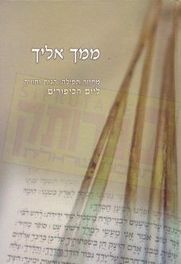
When I was in Israel on Nativ, I was introduced to an amazing Machzor which has forever altered my High Holiday experience. Named ממך אליך (Mimcha Eilecha - 'From You, To You'), it's concept is brilliant - to provide a complete, traditional text surrounded by a plethora of traditional and modern commentaries, with everything from traditional, medieval and hassidic texts to modern poetry and short stories. Although it sounds like a lofty goal, I would love to see if anyone would publish a similar set in Emglish: a complete traditional Hebrew text, a translation that is faithful to the original, and texts to complement it from every corner of the Jewish experience, spanning time, place and outlook. While I do find the traditional liturgy and especially the piyutim (poems which complement the structured prayers) very meaningful, the readings and quotes in this Machzor have helped to enhance the meaning of my Rosh Hashanah and Yom Kippur experience.

On the final page of the Yom Kippur Musaf service I found a short bt very meaningful quote which hearkens back to my d'var torah for Shabbat Shuvah:
קחו עמכם דברים ושובו אל ה' -את הדברים שאתם אומרים בבית הכנסת, בשעת התפילה והלימוד, אל תשאירו שם, אלא קחו את הדברים הללו עמכם גם בצאתכם משם.
"Take with you words (d'varim), and return to God" - These words which you say in the synagogue, during times of prayer and study, should not be left there, but rather should be taken with you when you leave there."
- Malbim (19th century Russia)

I feel that this quote is the perfect answer to my search. There is a reason the Yom Kippur happens once per year, as it is the pinnacle of our relationship with God. But this day was and is not an end in and of itself, but a means to impact on how we choose to live our lives each and every day. Especially on Yom Kippur, but each and every time we daven or learn, we should not leave our words and prayers in Shul, but allow them to influence our daily lives. Judaism is not meant to be just a compartment of our lives, but the essence of who we are and what we believe in.

Friday, October 3, 2008

Hayom! - היום! - Today!

While whole bookshelves have been written about the themes of the High Holiday Liturgy, I would like to focus on one which I find particularly meaningful and which helps explain my great distraught at reading a feature article in the New York Times yesterday.

Throughout the liturgy, both the core b'rachot and the piyutim, of both Rosh Hashanah and Yom Kippur, remind us of the special power invested in those very days, in the repeated use of the word 'Hayom' - today, this day. These references reminded me during my tefillot to concentrate on the unique opportunity to reflect on the beginning of a New Year, and the focus on the day elevates the other core themes of the Rosh Hahanah Musaf (God's Kingship, Remembrance and Revelation), as well as atonement on Yom Kippur.
Here are a number of the countless tefillot that reflect the 'Hayom' theme, which has helped bring meaning to my Yamim Noraim so far.

וּנְתַנֶּה תּקֶף קְדֻשַּׁת הַיּום. כִּי הוּא נורָא וְאָים
And we proclaim to you the greatness of this day, for it is terrible and awesome.

עוד יִזְכּר לָנוּ אַהֲבַת אֵיתָן, אֲדונֵינוּ.
וּבַבֵּן הַנֶּעֱקַד יַשְׁבִּית מְדַיְּנֵנוּ.
וּבִזְכוּת הַתָּם יוצִיא הַיּום לְצֶדֶק דִּינֵנוּ.
כִּי קָדושׁ הַיּום לַאֲדונֵינוּ:
May he still remember for us the love of the steadfast one (Avraham), our Ruler,
and through the one who was bound (Isaac) may he set to rest our strict judgment,
And through the merit of the pure one (Jacob) may he bring out today a positive decree,
For today is holy to our God!

היום הרת עולם, היום יעמיד במשפט כל יצורי עולמים
Today is the birthday of the world, today all creatures of the world will stand in judgment.

הַיּום תְּאַמְּצֵנוּ:
אמן:
הַיּום תְּבָרְכֵנוּ:
אמן:
הַיּום תְּגַדְּלֵנוּ:
אמן:
Today you will strengthen us - amen!
Today you will bless us - amen!
Today you will raise us up with your greatness - amen!

And on Yom Kippur, we repeat too many times to count, in our liturgy and Torah reading (Vayikra 16:30)
כִּי-בַיּוֹם הַזֶּה יְכַפֵּר עֲלֵיכֶם, לְטַהֵר אֶתְכֶם: מִכֹּל, חַטֹּאתֵיכֶם, לִפְנֵי יְהוָה, תִּטְהָרוּ.
For on this day shall atonement be made for you, to cleanse you; from all your sins shall ye be clean before the LORD.

As this is only a sampling of the times that our rabbis reinforce the power of these special days to transform us each year, I was greatly distressed to see this article on the front page of the Metro section yesterday.
Rabbi Has Message. So Does Cellphone. - NYTimes.com
In it, the Times reporters traveled to a number of Reform and Conservative congregations in Manhattan and at each found a variation of the same scene. Congregants frantically walked in and out of the service, checking their cellphones, blackberries and iphones for the latest financial news. At one Conservative shul, the static from so many electronic devices caused their microphones to malfunction.
While I did find out the gravity of the financial situation after the conclusion of the holiday, and while I understand that I don't work on Wall Street, I think that not being able to remove oneself from the world of business on such a special day is both sad and disrespectful. If the news outside is sad, than it is even more of a reason to leave it behind and come together as a community to praise the "author of the universe (אדון הכל) and to pray for a better future.
While I personally would not use an electronic device on Yom Tov out of halachic (Jewish legal) imperative, I would encourage others who do not feel that compulsion, to turn off their communication devices, and instead communicate with their souls and with God, "He who spoke and the world came into being." Wall Street will open after shul and after the holidays. But this day, these days of awe, only come once per year. May we sense their message and seize the power embedded in the words of the machzor and the days themselves. I wish to conclude with one final prayer:
כְּהַיּום הַזֶּה תְּבִיאֵנוּ שָׂשִׂים וּשְׂמֵחִים בְּבִנְיַן שָׁלֵם:
כַּכָּתוּב וַהֲבִיאותִים אֶל הַר קָדְשִׁי וְשִׂמַּחְתִּים בְּבֵית תְּפִלָּתִי עולתֵיהֶם וְזִבְחֵיהֶם לְרָצון עַל מִזְבְּחִי כִּי בֵיתִי בֵּית תְּפִלָּה יִקָּרֵא לְכָל הָעַמִּים:
On a day such as this may you bring us, glad and rejoicing in the rebuilding of Shalem (=Jerusalem, but lit. wholeness, completion, peace), as it is written (Isaiah 56:7):Even them will I bring to My holy mountain, and make them joyful in My house of prayer; their burnt-offerings and their sacrifices shall be acceptable upon Mine altar; for My house shall be called a house of prayer for all peoples.

Amen.

Shabbat Shalom and G'mar Chatima Tovah!

Take with you d'varim (words?) - Parashat Vayelech

Hayamim chol’fim, shanah overet, aval hamanginah l’olam nish’eret

The days change, a year passes, but the melody remains.

The words to this Israeli folk/children’s’ song come to mind when reading this week’s short, but significant portions – the parasha of Vayelech from the Torah, where Moshe prepares to submit his poetic legacy to the people of Israel, and the Haftarah, which gives the name of Shuva to this special Shabbat. I would like to focus on the opening of this haftarah, and an important lesson that can be drawn from it.

This week’s haftarah is actually a composite of selections from among three of the twelve minor prophets, beginning with the concluding portion of the book of Hosea. Hosea’s prophecy deals with what Professor Amy Kalmanofsky calls the wayward wife metaphor, in which God is the husband and Israel, an unfaithful wife. But as Hosea’s words come to a close, the message is one of hope and reconciliation, appropriate for this season in which we reflect on our past deeds and how we can alter and improve our relationships with God and those close to us. The prophet, acting as God’s conduit, announces:

Return, O Israel, to the Lord your God,
For you have fallen because of your sin.
3 Take d’varim with you
And return to the Lord.
Say to Him:
"Forgive all guilt
And accept what is good;
Instead of bulls we will pay
[The offering of] our lips. (Hosea 14:2-3)

In Hosea’s vision, our return to God is not based on materialistic of financial acts – but Rabbi David Kimche (RaDaK) argues that it cannot be just words either. He explains, “I do not ask from you gold or silver or offerings, but rather a complete t’shuva with all of your heart. “

We are told that we can’t buy our T’shuvah with material good, but Hosea seems to imply that Teshuva does not take place in a vacuum; while we should surely start fresh with our words and actions, we are not required to go it alone. This prophetic call for our return is phrased in the plural, to remind us that repentance is designed to take place in a community, like ours here at MSRH and JTS, where we can recognize that we all have faults and shortcomings, and we can support one another in our growth and learning over the coming years. I would like to interpret Hosea’s term of d’varim as words of Torah, but Torah in the broadest sense. I hope that we can all find our spark of Torah in the new year, whether it is by studying with a friend, repairing the world, or anything in between. God has called us to return, our only requirement is to hear that call and take with us D’varim on our journey.

Shabbat Shalom and G’mar Chatima Tovah!

StatCounter